Iowa's nitrate problem, and how rainscaping can help
April 2026
Wayne Bruns
Central Iowa’s water supply is severely compromised. A 2025 Iowa water quality report found nitrate levels in the Des Moines and Raccoon rivers often exceeded national safety limits before being cleaned by water treatment plants. Over 70% of contaminants are linked to agriculture; however, runoff from residential properties can also contribute to the problem.
Amid these concerns, Kelly Jacobs, owner of Pocket Prairies—a native plant retailer—notes a rise in interest following last year’s water quality study. She explains, "Native species are the top food source and habitat for local pollinators and animals compared to non-natives."

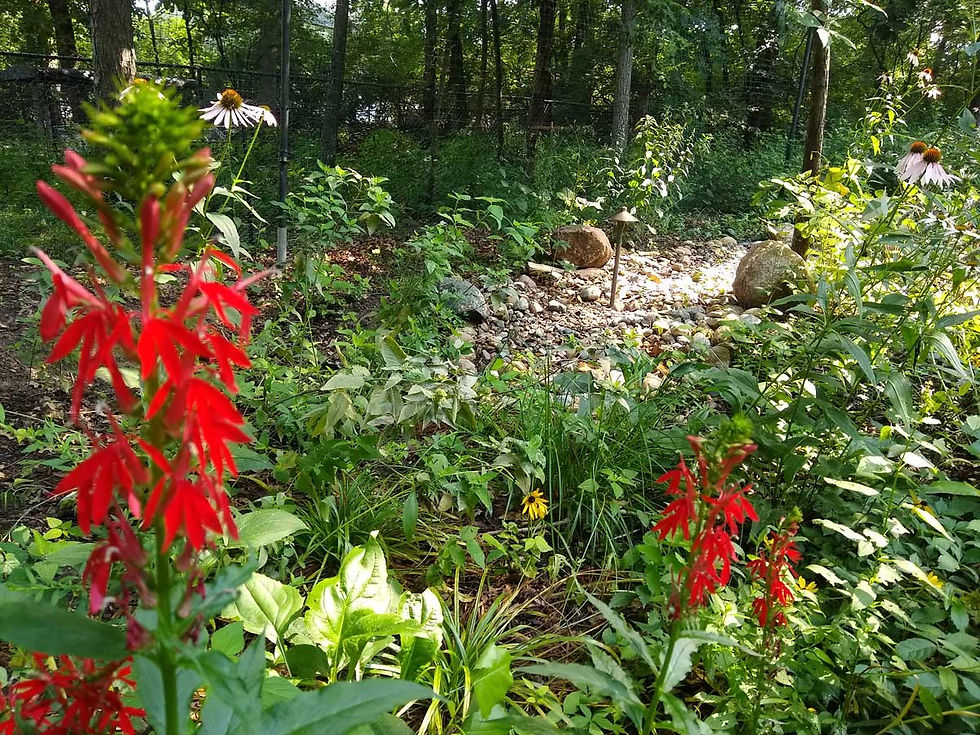
Urbandale resident and native species advocate Andrew Drenth transformed his yard into a haven for native plants. He explains native pollinators like milkweed and coneflower not only attract beneficial insects but are also more resilient than non-native species. "Seeing eight butterflies on one plant in the fall is amazing."
Despite these advantages, some still worry that native species plantings may look unkempt compared to traditional yards. To address this, Drenth is more intentional with his front-yard plantings, leaving some swaths of traditional grass. In the backyard, however, he lets a greater mix of native plants grow more freely.
Polk County Water Resources Manager Cassandra Druhl oversees the Rain Campaign website (https://raincampaign.org/). Here you can find information on native species, stormwater management, and available funding options. Druhl says, “We offer resources for everyone, from rain barrels and rain gardens to soil quality restoration.”
Funded by stormwater utility fees, Urbandale reimburses residents up to 50% of projects like these. Kristen Brostrom, Assistant Director of Engineering, says these projects help advance Urbandale’s broader sustainability goals. “A single project may not seem like much, but if more residents get involved, the result can have a real impact on our watershed.” For more information, go to https://www.urbandale.org/563/Storm-Water-Grant-Program.Restoration.”
Bery Engebretsen installed rain gardens in his Urbandale backyard with the city’s financial support. These shallow basins are planted with native species to filter runoff and reduce erosion from residential property. "The rain garden has greatly reduced runoff onto the next property. It is quite amazing."

Looking ahead, Engebretsen hopes to eliminate his traditional lawn someday. He is currently experimenting with sustainable landscaper Jeff Reiland on planting a “flawn,” a mix of lawn and flowering plants. The yard cover can be mowed like a traditional lawn while still providing the benefits of native plants. “We do this because of our larger concerns about the environment. We just do what we can to make our land healthy.”
For more information about sustainability efforts in Urbandale, check out the Urbandale Sustainability Fair on May 7 near the Urbandale library. (https://urbandale.librarycalendar.com/event/sustainability-fair-15569)
Wayne Bruns is an Urbandale resident and a volunteer with Sustainable Urbandale. This article was previously published in Urbandale Living: https://www.iowalivingmagazines.com/urbandale-archives